The date is December 3, 2018. The inauguration ceremony for the new County Council and County Executive is under way. Among the honorees is new council member Will Jawando wearing a West African boubou and kufi.
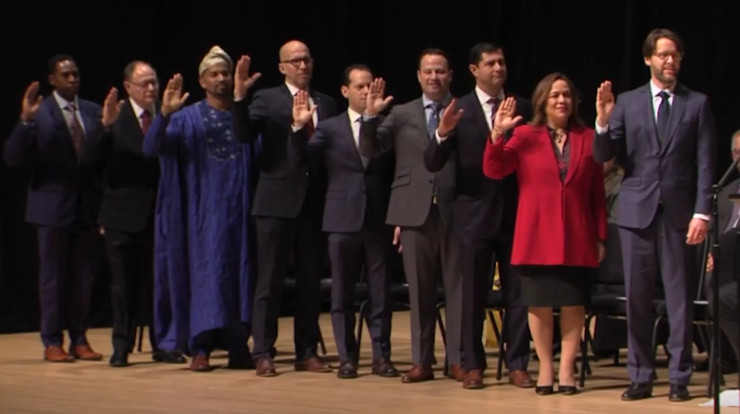
People snickered. I snickered. “This is grandstanding. This is demographic baiting.” How wrong I was; how wrong we all were.
By far Jawando identifies as a black Christian, but other facets come out in My Seven Black Fathers. When confronting a problematic basketball coach who asked about his religion, Jawando emphasized his Moslem heritage (p. 157):
It doesn’t matter what my religion is.” I gritted my teeth, partially because of his racism and also because the paternal side of my family is Muslim.
Jawando also expresses his Nigerian heritage (p. 136):
It was suddenly within my power to be a different kind of Nigerian in America than my father had been, he who, as an immigrant, perpetually felt like a native in his new land.
In honor of his Moslem-Nigerian heritage, Jawando chose West African garments to mark his achievement of winning his first election. Not everyone finds that admirable, but I do. Many children of immigrants highlight their heritage after passing an American milestone. These acknowledgments show just how amazing a country the United States is.
To conclude this series, I believe My Seven Black Fathers highlights two faults Mr. Jawando suffers from—far fewer than than the number of faults I have.
First, projecting two percent of Elizabethan English behavior on 100% of today’s whites. Jawando rails against slavery, red-lined housing, colonialism, and segregation as if he were a victim of these injustices while living in tony suburban Burtonsville. In second grade Jawando compares his classmates’s lifestyle to his own (p. 46):
While other families went on swanky vacations, mine worked. While other kids spent their weekends being shuttled from one pricey pastime to another, I ran errands with Dad on Saturday and sat in a Roy Rogers booth with my father on Sundays.
My guess is that the same comparison can be made between Jawando’s children and the white children growing up in Maryland’s Appalachian panhandle west of Hagerstown. At what point do we stop playing the victim card?
The second fault is perpetuating the injustices that so much shape his views. One of them is red-lined real estate (p. 205):
For decades, redlining had kept Black folks and other people of color from living in downtown Silver Spring. That notorious real estate and banking practice denied loans to non-whites trying to buy homes in an area where redlined maps contrived by banks carved out chunks of the city for whites only
If you want to see today’s redlining, look at the effect of MCPS on property values. The great school clusters (Whitman, Walter Johnson, Wootton, Poolesville, BCC, and Churchill) are generally in the western side of the county, while the less successful schools are on the eastern side. Students are “assigned” to their neighborhood schools, and to get your child into a a great school you need to either a) have a taxable income in the stratosphere or b) beg to get out of failing schools or c) apply for reparations should your child be fortunate enough to graduate. In spite of this heartbreaking situation, Jawando insists on funding MCPS with its colonial boundaries.
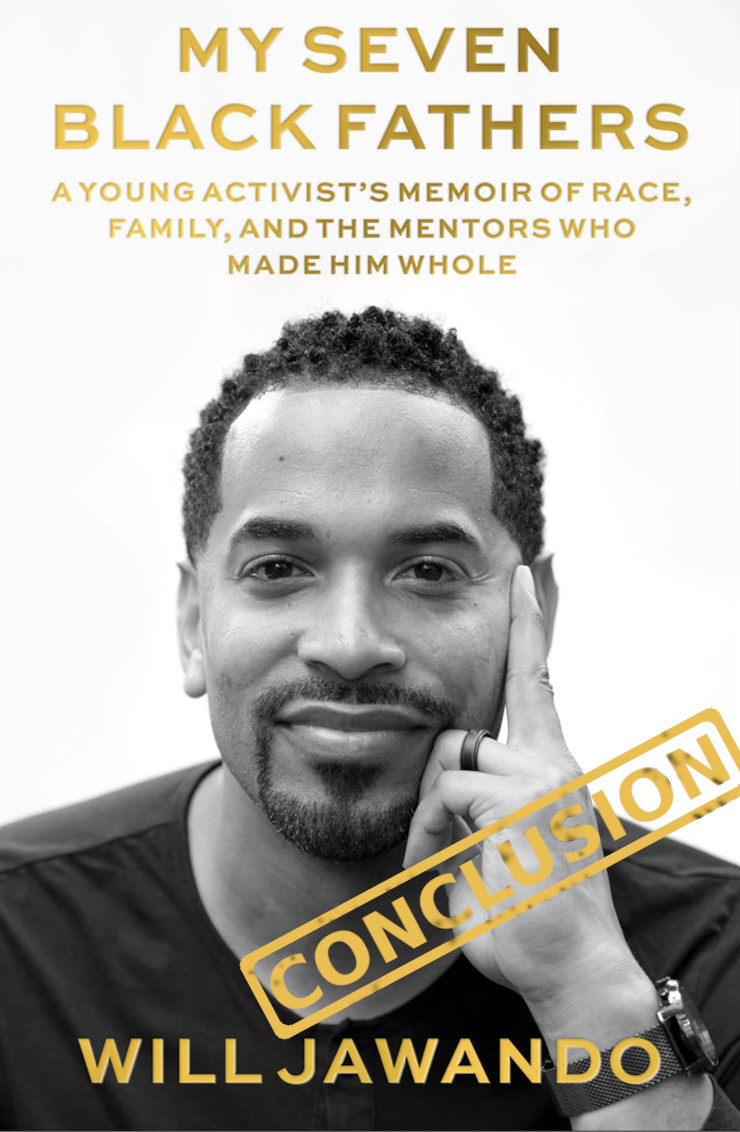
Brutally summarizing My Seven Black Fathers, Will Jawando’s childhood was that of a black boy growing up under varying levels of disadvantage. He was able to overcome that disadvantage when his mother found a stable partner, he had an exemplary elementary school teacher, and from there he was able to use his innate gifts to organize, excel, get media attention, develop a network of influential contacts, win an election, find a great marriage partner, and make his way into the upper middle class. Tragically, Jawando pursues policies that have nothing to do with his own life experience. Rent control and free menstrual supplies didn’t make him a success. Mimicking the progressives’ thinking will only doom today’s young black boys to the deprivation he was able to overcome.
What I wish for Mr. Jawando is this: look at your life and what caused the deprivation. Then look at your life and what relieved that deprivation. Pursue policies that helped remediate the the early struggles in your own life. Pursue policies that give these gifts to all black boys and to everyone else.