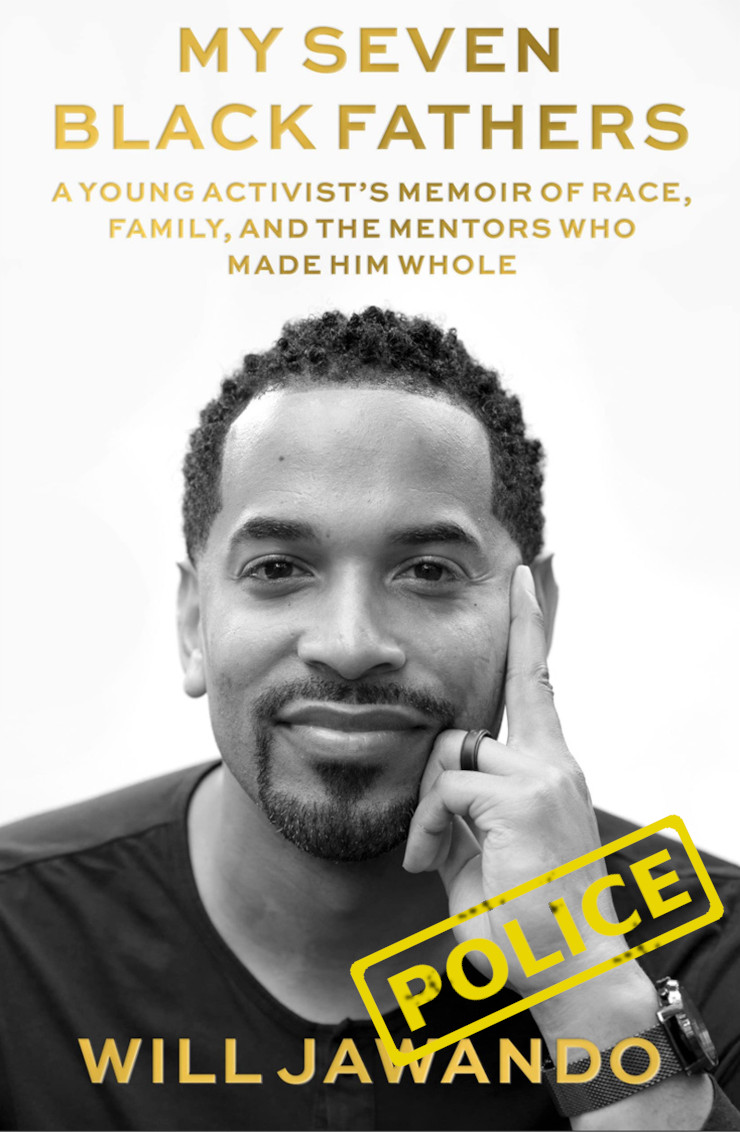
Law enforcement does not have a prominent place in My Seven Black Fathers, certainly not to the extent of race and education, but the picture Will Jawando paints for us is very discouraging (p. 114–115):
In 2001, the year of the 9/11 terrorist attacks, when my love of country had never been stronger, and while I was living with Wayne [Holmes, athletic coach and director of gospel choir at St. Johns], the Montgomery County Police pulled me over ten different times.
During that time of officers stopping me again and again without cause, I was actually working for the Montgomery County Police Department on my AmeriCorps assignment…
Yet the police stops were literally about me, and my skin, and the paradox of yearning to serve while being a casualty of a common racist practice made it clear that law enforcement was not my path.
Interestingly, I know a very talented and progressive black law-school graduate who expressed interest in working as a prosecutor to reform problematic practices from within. That conclusion is quite the opposite of Jawando’s.
Nevertheless, Jawando has been a critic of the county’s police department in general, and school resource officers (SRO) in particular. My sense is that it stems largely from his interactions with officers as a young black adult.
While preparing this piece I spent a few hours reading background material on police relations with communities and with students of color. Here is the one-word summary: heartbreaking. Some studies show that once a child is removed from school for disciplinary violations, the chances of that child entering the school-to-prison pipeline (SPP) increase. Other studies mention that children of color are more prone to run afoul of an SRO, which leads to higher chance of disciplinary action and, in turn, entering the SPP. One line of thinking is to defund SROs and in parallel expand funding for mental and behavioral counseling—all in an effort to prevent violence or at least minimize it without engaging the criminal justice system.
Regardless, there are some parents and students who prefer SROs and others who don’t. Some parents and students quite legitimately feel more secure with an SRO on premises. This is a good opportunity to return to the matter of school choice and school vouchers. Instead of the County Council or the Board of Education, neither of which can claim to fairly represent the county as a whole or its students, making county-wide, one-size-fits-all decisions regarding student safety, the parents should be empowered to make those decisions, and subsequently be allowed to send their children to the school that best reflects their preferences. That includes the presence of an SRO.
The entire matter of policing, law enforcement, and criminal justice is way, way beyond the scope of my expertise. Regardless, I do credit Jawando for keeping the entire matter in the public discourse, and wish for him and all our county’s policy makers the wisdom to proceed in a way that provides positive outcomes without engendering negative outcomes.