In 1632, King Charles I granted Lord Baltimore a charter to settle an area of new New World delineated by the Atlantic Ocean, 40th degree latitude, the Potomac River, and islands in the Chesapeake Bay. Charles named the area Maryland.
Because Baltimore was chummy with Charles, he received very enticing terms of ownership.
And we do by these Presents, for us, our Heirs, and Successors, Make, Create, and Constitute Him, the now Baron of Baltimore, and his Heirs, the true and absolute Lords and Proprietaries of the Region aforesaid, and of all other Premises (except the before excepted) saving always the Faith and Allegiance and Sovereign Dominion due to Us, our Heirs, and Successors; to have, hold, possess, and enjoy the aforesaid Region, Islands, Islets, and other the Premises, unto the aforesaid now Baron of Baltimore, and to his Heirs and Assigns, to the sole and proper Behoof and Use of him, the now Baron of Baltimore, his Heirs and Assigns, forever.
Baltimore retains ownership in perpetuity of the colony, as do his heirs and assignees (as long as he complies with other terms of the charter). Perpetual ownership is one characteristic of colonization. The people residing in the colony—indigenous or immigrant—have little say in the matter. The Crown makes or delegates the rules of ownership.
The residents of Arlington and Montgomery Counties (and many other American jurisdictions) apply similar reasoning to home ownership. A resident has the good fortune to buy a home, and that purchase entitles the resident to live in the same neighborhood with the same demographic and the same amenities in perpetuity. To ensure this perpetuity, residents use the force of law called zoning.
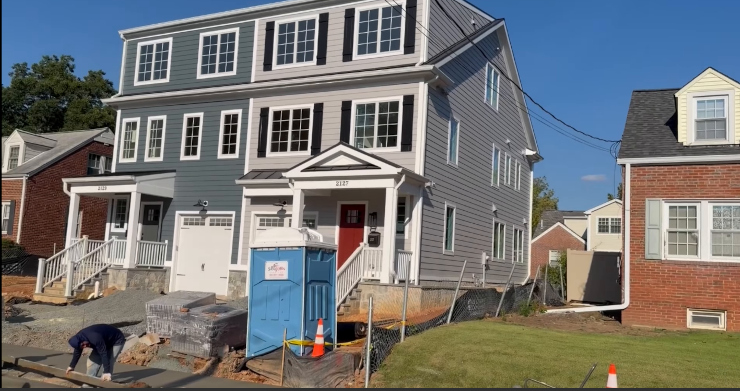
In the following video (source), two retired Arlington residents describe the new construction in their neighborhood. Their objections are true: the underlying infrastructure was not built for higher-density housing, and the new construction does not provide solutions for the missing middle.
Let’s suppose that the new construction is affordable only to upper-middle class feds, lobbyists, and business owners. Do existing Arlington residents really have the right to exclude that population from moving in?
Another aspect of this exclusion is that these retirees are probably drawing Social Security and Medicare payments funded by the working adults they are trying to exclude from their neighborhood.
When the retirees in this video say that the new constructing is “not good for the residents of Arlington,” or that the new buildings don’t “belong” in the area, they are talking about themselves and their lifestyle. They are entitled to that concern.
Nevertheless, property ownership does not entitle owners to act as if they received a perpetual charter from a monarch. Zoning is a social contract between residents and a legal authority that never should have been executed. Undoing the zoning entails breaching the social contract and causing possible damage to the existing residents. At the end of the day, a society needs to decide which is more important: protecting a landed class or allowing free migration. An American choice is the latter, and Montgomery County is taking the first baby steps to allowing freedom of movement and freedom of housing.
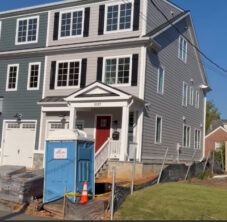
[Lead image: New duplex going up in Arlington. Source: MISSING MIDDLE HOUSING’s MYTH of AFFORDABILITY in Arlington, Virginia]