
Amy Ming walks into my vegetable store and wants to buy a few tomatoes. I ask her a few harmless demographic questions such as address, race, income, net worth, marital status, pronouns, gender identification, party registration, and positions on LGBT/Trump/DEI. (You know, the standard stuff we all have to disclose.) She provides all the answers I want to hear, so I enter her into a lottery. After a few minutes, I give her the bad news. “Sorry, Amy, you lost the lottery. You can’t buy tomatoes here. As a matter of fact, you can’t even be in my store, so leave.”
The worst part of this interplay is Amy’s acquiescence: “OK, I’ll try again tomorrow.”
This scenario is outrageous, humiliating, morally corrupt, and deceitful. Lotteries are no way to allocate necessities such as food, housing, water, or that must-have $15,000 Lana Marks Cleopatra Clutch purse. This is also no way to allocate a necessity such as education.
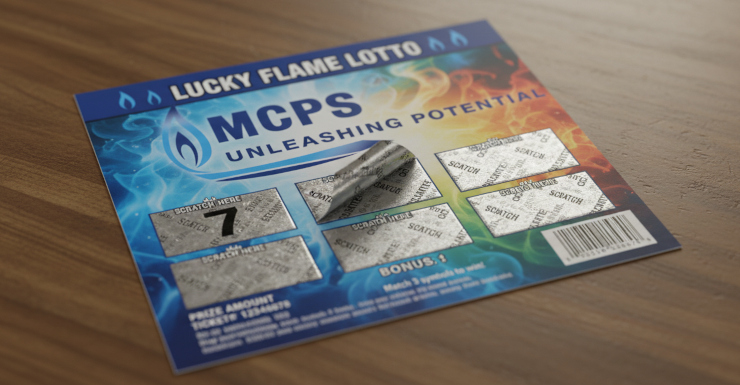
Yet this is precisely the protocol MCPS uses to allocate certain high-demand and low-supply classrooms.
Some competitive programs with a limited number of seats require that students meet specific criteria as determined by a central review of data and be invited through a criteria based lottery.
Admission to the Center for Enriched Studies, magnet schools, International Baccalaureate, foreign-language immersion, and other programs requires filling out an application form, MCPS conducting a “central review” to see if the student can enter the lottery, and then winning the criteria-based lottery. Every single step in this process is a barrier to a student’s success. There is also the problem of the “old boys’ and girls’ club.” If a parent is chummy with a school official, does that improve the student’s chances of admission? Even if the student is admitted, the desired program may be offered in only one location. For example, International Baccalaureate is offered only at Richard Montgomery.
The most frustrating aspect of this situation is the parents’ assent. Most or all of them think to themselves, “My Jerome didn’t get into the IB program. That’s OK, he’ll be fine in the local high school.” Only a parent who is willing for forfeit her responsibility to her child can give up so easily.
How should access to special programs be allocated? Through school vouchers. If there are 1,000 students who want to study in a Chinese immersion program, and MCPS has room for only 250, then give school vouchers to the remaining 750. Trust me, there are plenty of non-profits, philanthropists, and entrepreneurs who are interested in fostering the next generation of great Americans, and they are looking for avenues to provide the best opportunities (such as Chinese immersion) to today’s K–12 students.
As Frederich Hayek wrote in The Road to Serfdom:
Wherever the barriers to the free exercise of human ingenuity were removed, man became rapidly able to satisfy ever widening ranges of desire.
Central review and lotteries are barriers to a precious educational resource to equally precious students. Rid of them, we will see tenfold the number of students excel as we currently do.
Related posts:
 CM Will Jawando’s Paternalism and Focus on ‘Structural’ Racism Doesn’t Extend to Maryland State Lottery. Why?
 The Ubiquitous Nanny State Pushed by CMs Jawando, Glass and Others Somehow Misses the Damage Done by State-Run Lotteries
 Community Profile: A Charter School Comes to Montgomery County—Interview with LaChaundra Graham