
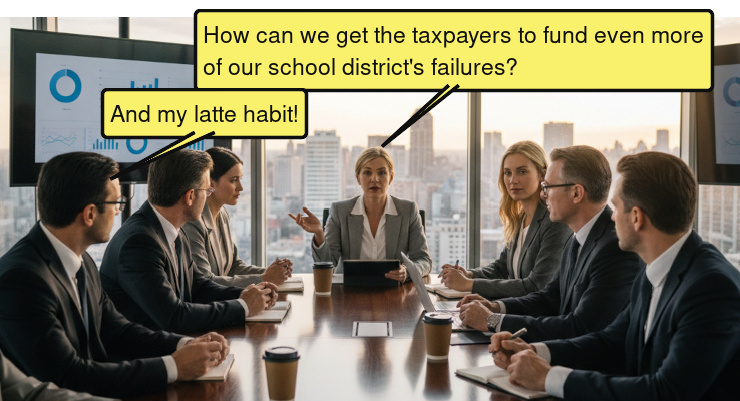
There’s a knock at your door. You open the door. A former bouncer at the 9:30 Club announces, “Mr. Gonzales of Aspen Hill never received his delivery of an Omega Speedmaster co-axial automatic men’s chronograph watch, so you are paying for the replacement.” The man then enters your premises and confiscates your Tesla charging station, which he pawns to pay for Mr. Gonzales’s replacement watch.
This is the scenario behind MCPS Superintendent Thomas Taylor’s proposal for issuing reimbursements for remedial courses should students graduate MCPS yet not be course-ready for Montgomery College (MC).
By 2035, the district should reimburse county public school graduates for the cost of any remedial mathematics and literacy courses they need to take at the local community college.
To show just how prevalent this problem is, MC’s 2024 Performance Accountability Report stated that “more than a third (34.2 percent) of first-time credit students entered the College in fall 2023 with developmental needs.” When we see that over one-half of MC’s student population is black or Hispanic, we come to an unfortunate conclusion that most of those failed graduates are of color.
Mr. Taylor has had an impressive career and an even more impressive resume. (He also has an impressive salary, making more in one year than I ever will in twothree. No, I’m not jealous.) Missing from his Big Ed background is any experience in the private sector. It is in the private sector, far more than in the public sector, where managers place emphasis on accountability and process improvement.
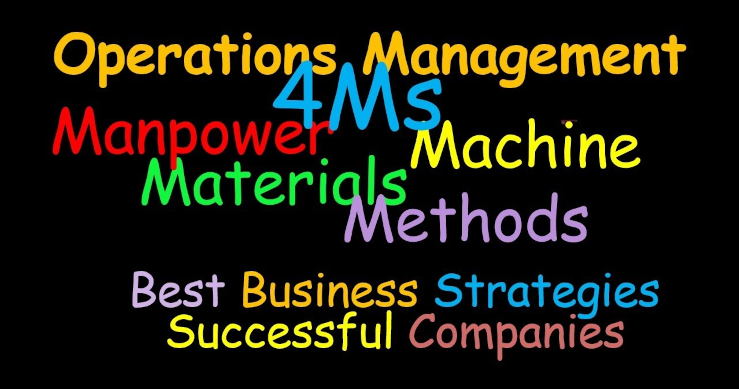
A typical scenario in process improvement is as follows. A logistics company is receiving complaints about misdelivered packages. A committee is convened to determine if there is indeed a problem, not just a perception of a problem. If there is a problem, the company takes immediate corrective action to reduce the number of misdeliveries. After that, the company identifies the root cause of the problem, and then takes preventive action to address the root cause. Almost always the root cause is one of the Four Ms: machinery, materials, methods, or manpower.
Preventive actions are often unpleasant, because someone must admit to a deficiency and then implement a change.
As far as we know, Mr. Taylor’s proposal to reimburse MCPS graduates for remedial courses lacks any sense of true process improvement.
- Is there really a problem? Tragically, the graduate may have come from a dysfunctional home, so MCPS has no liability.
- Should the graduate be attending MC at all? The graduate may be eventually headed for student-loan debt while taking useless courses such as UMD’s Intro to WGSS: Gender, Power, and Society. In cases such as these, the graduate gets a bachelor’s degree yet is still unemployable because she didn’t learn any skills that employers are looking for. Perhaps the graduate is better off in trade school.
- If there really is a problem, what is the root cause for the failure: classroom infrastructure (machine), school supplies (materials), teaching style (method), or a specific series of teachers (manpower). In those cases, what procedures does MCPS have in place to correct those causes. If we can demonstrate that a teacher is not effective, is MCPS ready to remove that teacher from the classroom?
Process improvement places corrective and preventive action directly on the cause of the problem. “Reimbursing” a graduate because she cannot do coursework at grade level is not process improvement. Instead it only adds further bloat to the school budget and forces a third party, us the taxpayers, to pay for a system that failed the student.
Without any form of remediation within MCPS, Mr. Taylor isn’t offering a gift; he is offering reparations for a failure that these graduates were forced into. What’s worse, without remediation within MCPS, Mr. Taylor is guaranteeing that “Maryland’s largest school system” will continue to graduate a large number of students, of all colors, who are not ready to attend MC. Mr. Taylor, or those who employ him, are only proving that MCPS places itself above its students.
[Body image: 4Ms of Operation Management – Business Strategies – Successful Companies | Entrepreneurship, wisebox YouTube channel]