
Maryland’s beleaguered taxpayers are also getting smacked with energy rate hikes and the resulting large power bills this summer as the mid-Atlantic electrical grid operator (PJM Interconnection) struggles to ensure reliable power to homes, businesses and families across the region.
Since reliable energy is a lifeblood for business operations and production (food, retail goods, transport, etc.), any large, unpredictable increase in power/energy expense will result in higher overhead calculated and thus, higher costs right back to the consumer. It is a potentially vicious cycle—and it explains why retail prices for, say, groceries, are pricier in Maryland than in Virginia or other neighboring states. Don’t believe us? Go to Northern Virginia and compare the prices of common groceries or beer or refrigerated goods. Obviously, other factors (taxes, regulations, local production) play a factor as well—but the prices for goods are unquestionably cheaper, on the whole. This isn’t some random occurrence.
How did a once-reliable power grid in Maryland, that provided sometimes-increasing but largely predictable energy rates and reliable power throughput, become what it is today? The roots of this energy fiasco are in the attempted energy production central planning out of Annapolis and Montgomery County. And this issue was seeded over a decade ago with our tax dollars when ideologues in Annapolis decided to start something called the “Maryland Clean Energy Center” back in 2008 (again, with tax dollars). This government-funded center (MCEC) now consumes more and more tax dollars to then “sustain momentum” across initiatives (see screen cap below). Curiously, none of these initiatives seem to involve lower energy bills for ratepayers:
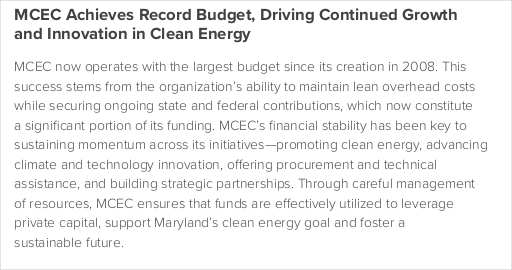
And we can now see the bitter fruit of this government-funded central plan to make Maryland taxpayers only finance a few politicians’ “preferred” energy products in highly regulated markets that, frankly, aren’t fair or “equitable”. Per a MarylandMatters.org article this May, 2025:
“Beginning June 1, elevated rates took effect for utilities across Maryland, from Baltimore Gas & Electric to Delmarva Power and Pepco. The reasons go back to economics class: low supply and high demand. But who is to blame depends on who you ask.”
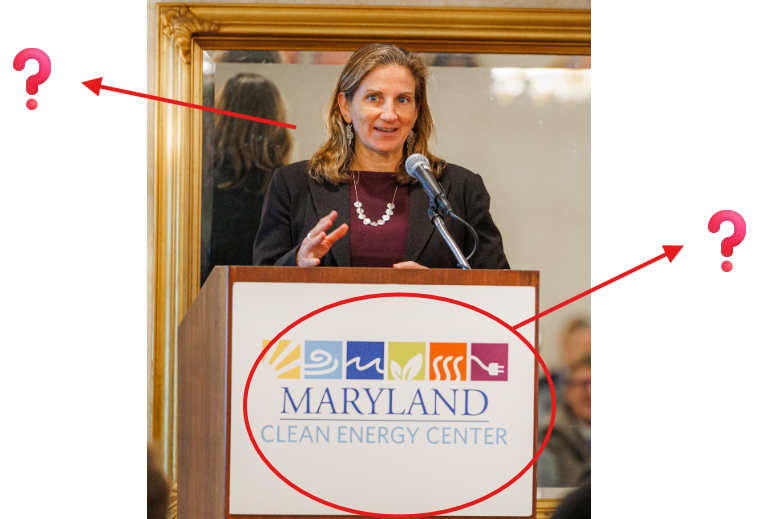
Well, one person who the Maryland media should absolutely be “asking” questions of is Montgomery County’s delegate from District 20 (pictured above article at the MCEC speaking), Democrat Lorig Charkoudian. The delegate has been in Annapolis since 2019 and has sponsored or co-sponsored dozens and dozens of energy policy bills, many of which have become law.
The regulations Charkoudian has helped to author into existence have restricted the types of energy projects that get off the ground in MD, and they are also shuttering energy plants that were providing reliable, affordable power back to the grid. Keep in mind, that every dollar the state finances to “green” projects is potentially a dollar that can’t make it to another worthwhile energy product (natural gas, oil, nuclear) in the same state market. It is a type of cronyism, a picking of “winners” and losers in the market by political actors, not market actors. There’s also no sun at night, and the wind doesn’t gust 24/7, thankfully. Lower supply. Higher demand (Maryland does have more residents than 20 years ago, despite the politicians’ attempts to chase away taxpayers). Yada yada.
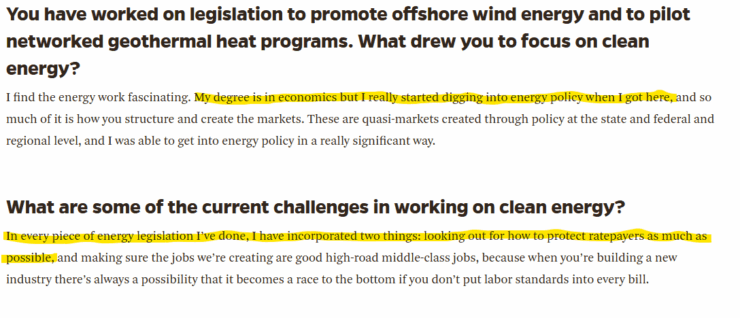
The MD state delegate has a PhD in Economics from John’s Hopkins University and was profiled by the University this past Spring:
Is there any chance someone in the Maryland or John’s Hopkins media will ask the basic questions about energy policy to this delegate, or others? Or state the basic facts about the on-the-ground reality of energy costs hammering Marylanders?
More to come.
Related posts:
 A Mere Five Months After Touting the “POWER” Act for Offshore Wind in Maryland, MoCo Politicians Prove To Be Poor Economic Forecasters
 Neo-Feudalism: Your Piedmont Property? It Might Get Seized via Eminent Doman for Power Lines. Eric and CM Dawn Luedtke’s 2 Acre Ashton Estate? In the Clear.
 B-Movie Productions Mean Big (Maryland Taxpayer) Bucks for Movie Makers, Maryland Politicians